
Almost every smartphone launch over the past few years touts the AI capabilities of devices, from entry-level smartphones to top-tier flagships.
While the rise of generative AI has resulted in some useful tools, it has also resulted in a trend of underwhelming features and sometimes stagnant hardware upgrades.
So when Honor’s launch of the X9d focused on durability and AI, I was more curious about what the hardware improvements were. After all, the previous generation, the Honor X9c, impressed me with its well-rounded features and value for money. I have also been using the Honor 400 Pro for the past few months and it’s not the AI features I value the most, it’s the capable hardware.
During a media session with Honor South Africa CEO Fred Zhou and Honor South Africa CMO Mark Lei, I asked a question for the generative AI skeptics among us.
With AI features often being seen as a shortcut or marketing hype when companies don’t want to invest in hardware, what would they say to South African consumers regarding the company’s commitment to continued hardware improvements and innovation?
And as skeptical as I was, I did like the answer.
Honor says it wants to continue being an industry leader
Honor SA CEO Fred Zhou notes that at MWC, the company committed to investing $10 billion in AI over the next five years. However, he said that the company would continue to invest in hardware and that this already shows in the X9d.
“For example, this phone comes with an 8,300mAh battery. So it’s the third generation of silicon-carbon technology,” Zhou said.
Silicon-carbon batteries allow for greater energy density in a smaller battery. This is why a phone like the X9d, which is only 7.8mm thick, can still achieve a large battery capacity. For context, the Samsung Galaxy S25 is 7.2mm thick with a 4,000mAh battery and the S25 Ultra is 8.2mm thick with a 5,000mAh battery.
Honor’s third generation of silicon-carbon battery technology also allows for a higher density compared to the first generation. Zhou noted that the first generation only had 5% silicon, but the third generation has more than 20% — which is why this slim battery can provide double the capacity compared to phones of a similar size.
“This is just one example of the technology and hardware investment from Honor’s side,” he said. “Long use and durability are very important for consumers.”
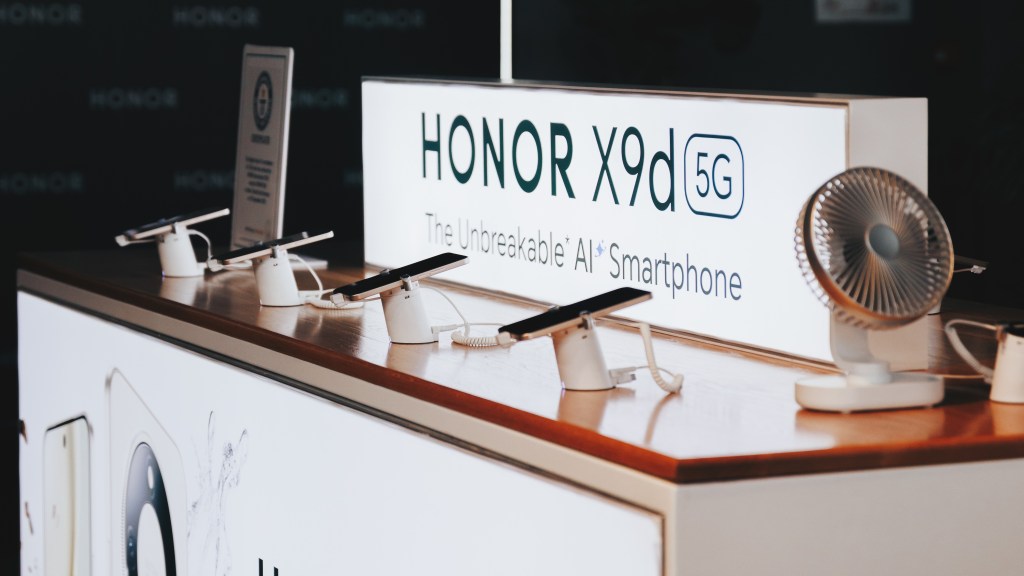
He added that Honor also continued to innovate on the phone’s structure to improve durability. The X9d comes with an IP69K rating, along with IP68 and IP66 certification. The newer IP69K rating denotes protection against high-pressure water jets from multiple angles.
“So all these kinds of things are a demonstration from Honor’s side that we will never forget about hardware investment and improvement,” he said.
Honor SA CMO Mark Lei also shed some light on Honor’s commitment to hardware, as well as other highlights of the X9d.
“We have confidence that we always will have the best battery in the industry. Not only in South Africa,” Lei said. He pointed to the launch of Honor’s Power 2 in China, which has a 10,080mAh battery.
“This phone [the x9d] is the biggest battery in South Africa. So we have confidence.”
He also highlighted the phone’s display technology, especially its high PWM dimming frequency. At 3840Hz, the PWM dimming on the X9d outpaces many flagship devices from other companies.
PWM dimming is used to control display brightness, but lower frequencies can cause issues like eye strain in people with sensitivity. As someone with chronic migraines and motion sensitivity, high refresh rates and higher PWM dimming frequencies are important to me.
Lei added that the company is also continuing to invest in its camera technology.
While the X9d features a 108MP main lens, I personally prefer lenses that balance resolution with sensor size and zoom capabilities. However, there’s also only so much you can do when aiming a phone at the budget to mid-range market.
AI algorithms can improve the processing of images, but too much reliance on software can result in images looking over-processed. Robert Triggs over at Android Authority covers this when discussing that AI won’t save bad camera hardware.
While I always recommend trying a device for yourself to see how it performs in real life, I was encouraged by the continued hardware gains shown by Honor. In fact, it’s the X9d’s hardware that makes me think that’s where its true value lies.
Honor X9d specs and price
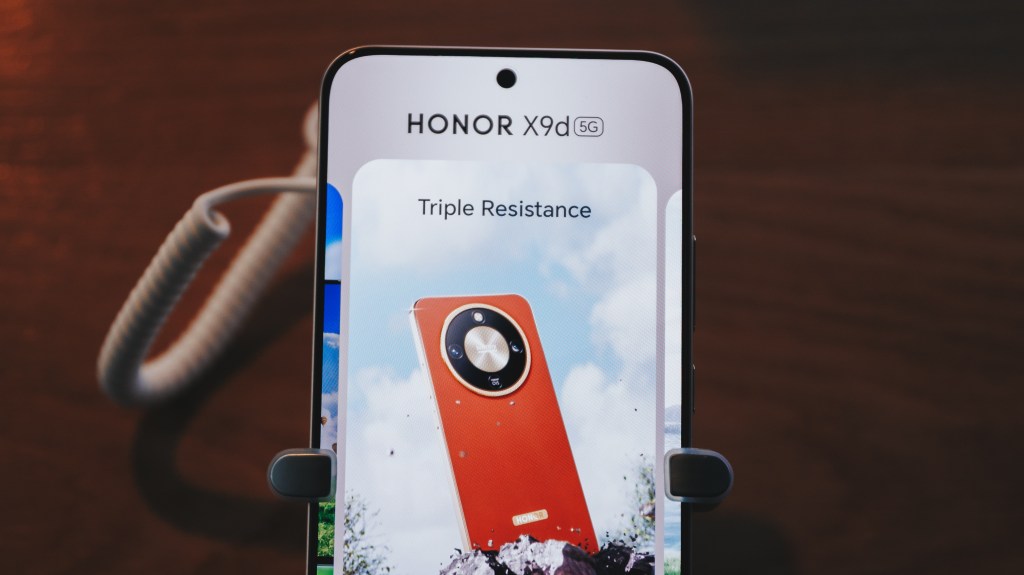
While I’ve discussed the phone’s specs here and there in this post, here’s a quick summary if you’d like a quick look:
- Display: 6.79-inch AMOLED display (2640 x 1200 pixels) with 120Hz refresh rate
- Processor: Snapdragon 6 Gen 4
- Main camera: 108MP main lens + 5MP wide-angle lens
- Selfie camera: 16MP
- Battery: 8,300mAh with 66W wired charging
- RAM: 12GB
- On-board storage: 256GB
In terms of pricing, the Honor X9d has a recommended retail price of R9,999 in South Africa.
Overall, the hardware value the phone provides and the pricing continue to be encouraging signs that it can deliver value-for-money to price-sensitive consumers who still want a quality hardware experience.
Images: Supplied by Honor
 Tech Valkyrie